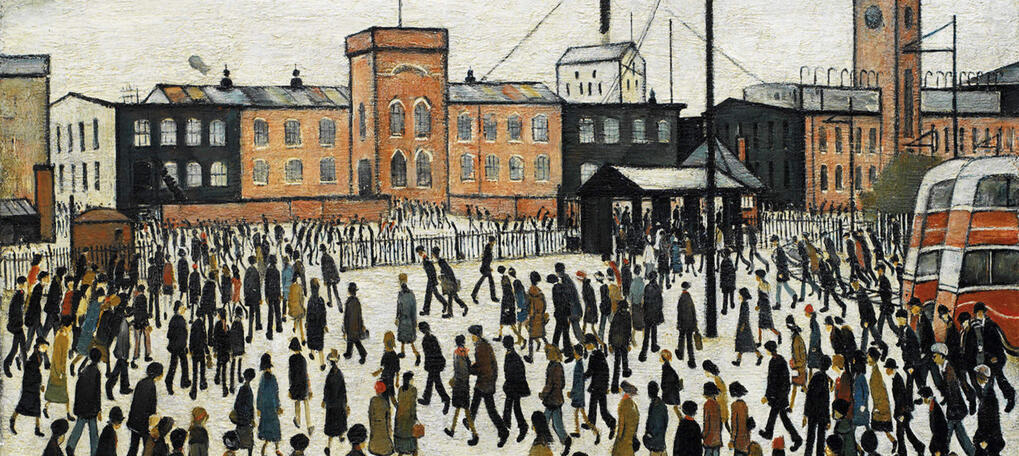
on identity during the modernist era
Exploring themes of identity and the self as a window into the human experience during the British Modernist Era
introduction
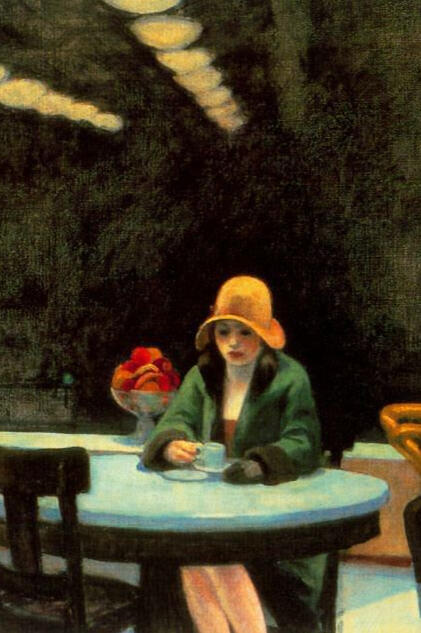
One of the most common themes for modernist literature is the idea of the self, encompassing ideas like isolation, disillusionment, and self-exploration. It was around this modernist era that many new technologies sprung up, leading to both a revolutionary idea of a modern utopian society and a quickened pace of everyday life, and the rising of new psychological theoreticians like Sigmund Freud who recommended a deeper understanding of our inner psyche happened (“History on Modernism”). According to Siddiq, things such as World War I and the challenging of traditional values and norms were also factors that affected the arts (99).As the world around was starting to change, so too did its citizens as they grappled with the sudden influx of contemporaneity around them. As mentioned, this effect can be seen in the arts, and especially in literature as well. Wrenn mentions that modernism “embraced the issues of class, gender, the struggle for knowledge, and the senselessness and alienation of the time” (9).One of the most common themes for modernist literature is the idea of the self, encompassing ideas like isolation, disillusionment, and self-exploration. Fitting, given how trapped people were by most leading institutions in the system. Dissonance with one’s identity is closely related with isolation, especially when one’s identity is something outside of the norm. Establishing and sticking to one’s “authentic existence” leads to being a lonely “outsider”, Pappenheim writes (ch. 1).This archive, then, will feature two works that highlight the chosen theme, showcasing identity, or how they attempt to find and re-establish it, in the thick of the confusion that the modern world has brought about.
archive
The Unknown Citizen (1940), by W.H. Auden
The poem “The Unknown Citizen” describes the life of a man who seems to have excelled as a model citizen while he was alive. He did his job, did what was expected of him, held the right views on issues, and many other things. While seemingly normal at first glance, closer focus allows us to see that the poem was meant as satire to criticize the society during this time.“The Unknown Citizen” was published just a year after World War II ended in 1939, highlighting the disorder and chaos that preceded the poem. The poem also mentions modern technology, such as “A phonograph, a radio, a car and a frigidaire” (Auden, 24), highlighting the increasing consumerism in the modernist era. The title itself speaks of an unknown man, as they are someone who experiences a lack of identity, being controlled by the state. While they may seem content, there is no actual joy in the citizen's life. Such a person is reminiscent of the modern man during those times, experiencing a lack of freedom and individuality. Such can cause a man to suffer from despair, “completely devoid of any possibility of endowing his life with significance” (Das, 46). They are “made to conform to the norms of the states in such a way that they are not in position to assert their individuality, and hence are ‘unhappily’ happy” (Poudel, 254), showing a disjunction between the man and their self. The poem denounces the government’s way of how they pushed these ideas to their citizens.
Saturday Market (1921), by Charlotte Mew
“Saturday Market” is a short poem that describes a small, local community as they gather around a market. However, the speaker seems to only be able to watch from afar, as she is being convicted by everyone around her for reasons unclear. However, a closer look at the poem’s usage of words containing sexual undertones and a “red dead thing” (Mew, 22), perhaps signifying either a miscarriage or an abortion. Either way, the poem is telling of how society treats their women, and how the speaker turns to isolation in fear of them. Such a case shows how one’s own exploration of identity is held back as they are not allowed to be who they want to be.Black notes that this usage of the female perspective provides a different view of modernist literature themes; it makes use of alienation in society to highlight the vulnerability and otherness of people, wherein crowds become less of something that they hate and more of something they can hide in to conceal their otherness (7). Mew weaves a story that attempts to derive empathy from its readers, something that is central to her poetry, especially for those who are marginalized (Black, 4). Amidst the fast-paced society that seems so dreary, Mew advocates for compassion despite it all.
Overall, both works showcase how the people of the modernist era struggled with their identity, especially as the world around them changed and forced them to do so as well. Despite this, authors have managed to make responses to their society in an attempt to somehow fight back against all the chaos and hopelessness everywhere.
works cited
Auden, W.H. “The Unknown Citizen.” 1940, Poets.org, https://poets.org/poem/unknown-citizenBlack, Elizabeth. ““Bury Your Heart”: Charlotte Mew and the Limits of Empathy.” Humanities, vol. 8, no. 4, Nov. 2019, pp.1-10, https://doi.org/10.3390/h8040175Das, Biswarup. “The Tragedy of Human Condition: the Anonymity of Modern Existence and Auden’s the Unknown Citizen.” American Research Journal of Humanities & Social Science (ARJHSS), vol. 2, no. 10, Oct. 2019, pp. 44-47, https://www.arjhss.com/wp-content/uploads/2019/10/E2104447.pdf"History of Modernism." Miami Dade College, https://www.mdc.edu/wolfson/academic/artsletters/art_philosophy/humanities/history_of_modernism.htm. Accessed 2 Jan. 2024.Hopper, Edward. Automat. 1927, www.EdwardHopper.net, https://www.edwardhopper.net/automat.jspLowry, L.S. Going to Work. 1943, Imperial War Museums, https://www.iwm.org.uk/collections/item/object/17026Mew, Charlotte. "Saturday Market." 1921. Poetry Foundation, https://www.poetryfoundation.org/poems/55325/saturday-marketPappenheim, Fritz. The Alienation of Modern Man: An Interpretation Based on Marx And Tönnies, Monthly Review Press, 1959. Marxists Internet Archive, https://www.marxists.org/subject/alienation/pappenheim.htmPoudel, Uttam. “Humanism in Crisis: Ironizing Panopticism and Biopower in W. H. Auden’s “The Unknown Citizen”.” International Journal of English Literature and Social Sciences, vol. 6, no. 5, Sept.-Oct. 2021, pp. 250-255, https://ijels.com/upload_document/issue_files/38IJELS-110202110-Humanism.pdfSiddiq, Abubacker. “The Evolution of Modernist Themes in 20th Century English Literature.” Confluence of Curiosity: Multidisciplinary Explorations in Modern Research, vol. 2, Dec. 2023, pp. 98-107, http://dx.doi.org/10.25215/9358795476.11Wrenn, Heike. “The Woman In Modernism.” English Literary File, vol. 2, pp. 9-13, 2010, https://www.uscupstate.edu/globalassets/academics/college-of-arts-humanities-and-social-sciences/languages-literature-and-composition/english-literary-file/elfvol2wrenn.pdf
about
This site was made by Judell Patricia S. Balaquit, a BA English Studies: Literature student in fulfillment of their requirement for Eng 131, a class about Modern British Literature.